

Golden Waffle Publishes Hotel Breakfast Trial Scorecard for UK Operators
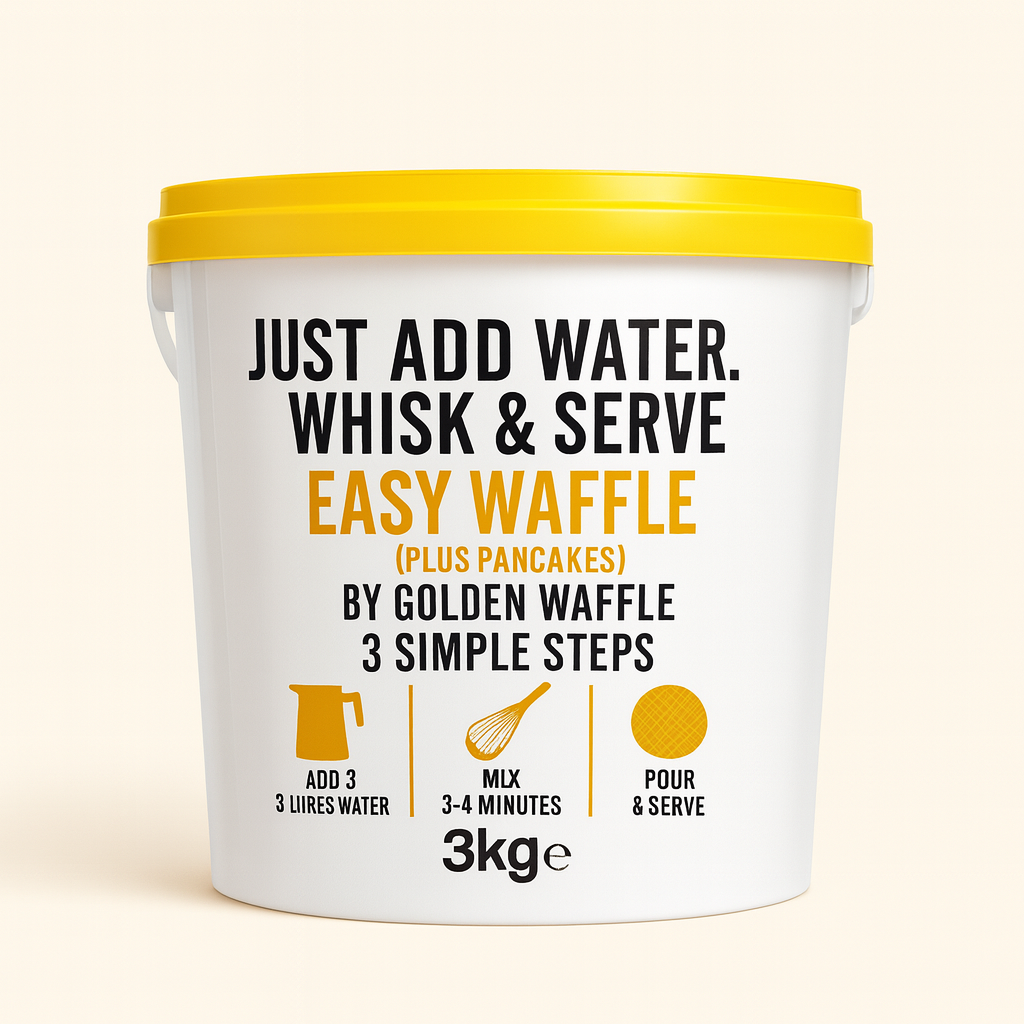
Golden Waffle just-add-water commercial waffle mix for hospitality operators.

Golden Waffle batter dispenser and commercial waffle machine shown in a breakfast station setting.
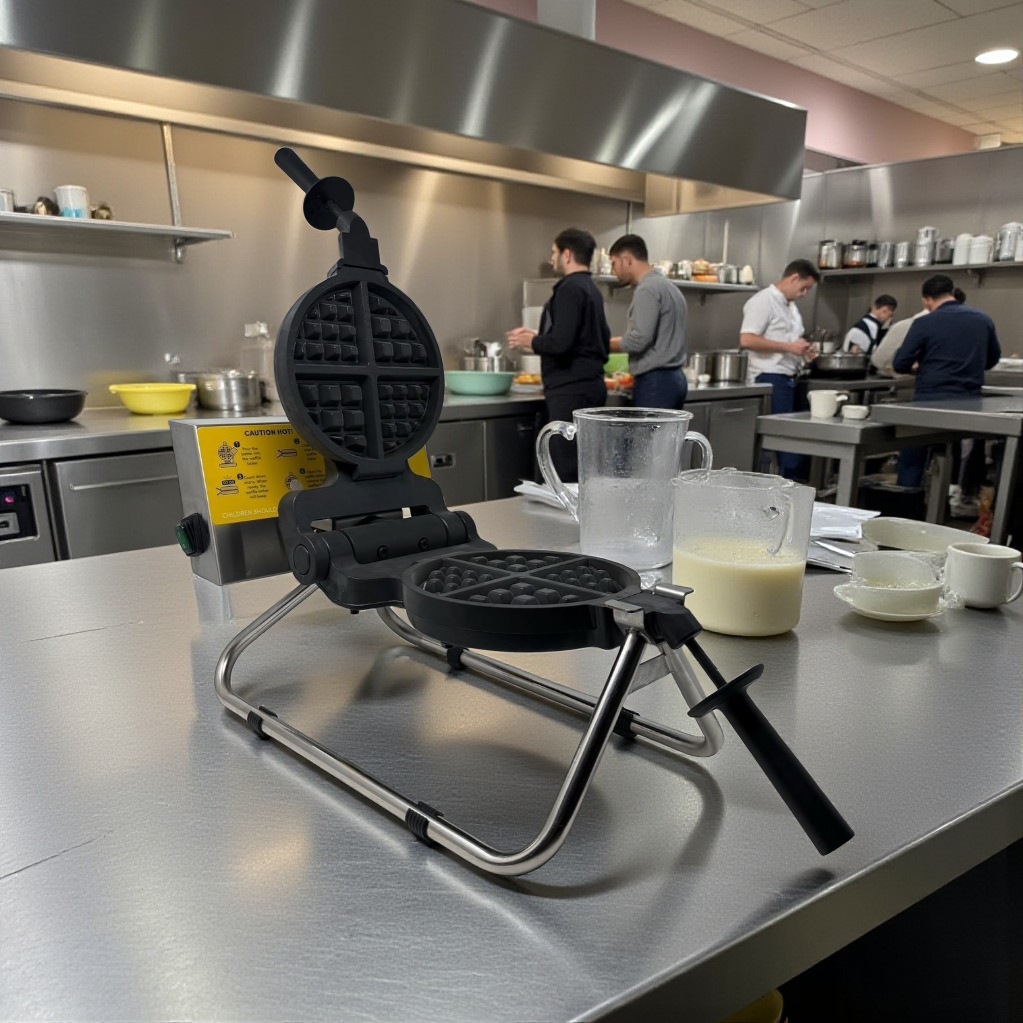
Golden Waffle commercial waffle machine for hospitality operators.

Golden Waffle supplies commercial waffle mix and equipment for UK hospitality.
UK supplier invites hotel sample enquiries and sets out practical measures for guest uptake, service flow, staff workload and cost per usable waffle.
MANCHESTER, GREATER MANCHESTER, UNITED KINGDOM, October 13, 2026 /EINPresswire.com/ -- Golden Waffle Group Ltd is inviting UK hotel operators to discuss waffle sample evaluations and is issuing a practical trial scorecard to help breakfast teams assess the results. The Manchester-based supplier's guidance sets out what to record before, during and after a controlled test, giving food and beverage managers a clearer basis for deciding whether a waffle offer fits their property.The scorecard focuses on five questions: whether guests choose the product, whether staff can reproduce it, whether service keeps moving, what each usable portion costs and what needs to change before a wider introduction. It is intended for hotels assessing an initial sample, testing a different mix in suitable existing equipment or preparing a proposal for a future breakfast installation.
Golden Waffle supplies UK-blended, just-add-water commercial waffle mix and welcomes hospitality sample enquiries. Equipment availability and any proposed trial arrangements must be confirmed directly before a start date is agreed. An enquiry does not guarantee a loan machine, a free equipment trial or an immediate installation. The guidance is designed to help hotels make progress on evaluation while establishing the supply arrangements appropriate to their operation.
Start with a decision that the trial can answer
A useful pilot begins with a short written question. For one property, that might be whether guests would select a freshly cooked waffle alongside the existing buffet. For another, it might be whether a different mix can deliver the desired texture in equipment already on site. These are separate tests and should have separate measures.
Managers should define what a satisfactory result would look like before the first batch is prepared. That might include an acceptable waiting time, an agreed presentation standard or a maximum ingredient allowance for the proposed portion. These are the hotel's own targets, not universal performance standards supplied by Golden Waffle.
The test brief should name the person who will make the final decision and the colleagues who will collect information. A single page is sufficient if it makes the objective, service format, observations and review date clear.
Record the breakfast being served today
A hotel needs a fair starting point before it can interpret a change. Record breakfast attendance, the busiest arrival period, staffing and the way the current menu is presented. The comparison should reflect a similar type of service rather than treating an unusually quiet weekday as equivalent to a busy family weekend.
Baseline information need not be elaborate. Existing breakfast counts, purchasing records and a short supervisor's log can help explain the conditions. If a property does not already measure preparation or waste consistently, the pilot can establish that process without making unsupported claims about an improvement.
The team should identify other changes occurring at the same time. A new topping selection, extra staff member or revised buffet layout could influence the result. Recording those changes helps managers understand what the test actually demonstrated and what still needs investigation.
Use a repeatable trial record
For each service, the scorecard should identify the date, breakfast attendance, staff on duty, equipment used, mix batch and intended portion. A second area can record usable waffles, rejects, unserved product, preparation time and observations from the busiest period. A final area should capture guest comments and the supervisor's proposed next step.
Definitions matter. A rejected waffle that never reaches a guest is different from a served waffle left partly uneaten. A staff tasting is different from a paying guest's choice. Separate entries prevent the figures from becoming an attractive total that nobody can explain later.
The record should also state who counted each measure and which information was estimated. A consistently completed simple sheet will usually support a clearer discussion than a complicated spreadsheet with missing entries. Any measurement that interrupts breakfast excessively should be simplified before the trial expands.
Separate kitchen familiarisation from guest service
A preliminary kitchen session gives the team time to establish a repeatable method before guests are involved. Staff should follow the current product instructions and the equipment manufacturer's operating guidance, then agree the portion and presentation that will be used in the test. Training batches should be identified separately from live service.
The exercise should confirm that more than one colleague can prepare the agreed waffle. A result produced only by the most experienced member of the kitchen team gives limited information about an ordinary breakfast shift. Useful observations include unclear instructions, awkward utensil placement and tasks that require additional explanation.
Any change to the preparation method should be documented. Changing several things between batches makes the final result harder to interpret. The purpose of familiarisation is to establish the starting method that the service trial will evaluate.
Observe the busiest part of breakfast
Average output across a morning can hide a short period when demand exceeds the station's practical capacity. The scorecard should therefore include observations during the hotel's busiest arrival window. Record when a guest joins the queue, when their waffle is ready and whether the queue affects access to other breakfast items.
The team should distinguish cooking time from the complete serving cycle. Measuring batter, handling the finished waffle, replenishing supplies and helping a guest all occupy time. Equipment specifications alone cannot show how those tasks will interact in the property's particular layout.
If queues develop, record their likely cause before changing the setup. A bottleneck at the toppings counter calls for a different response from repeated delays at the cooking point. The next test should address the observed problem and retain the same measurement method.
Measure staff involvement honestly
A waffle offer should be assessed through the work it creates across the whole shift. Preparation is one part of that picture. Opening checks, replenishment, guest assistance, clearing and cleaning also need an owner. The scorecard can record these tasks separately so managers can see where time is spent.
For a proposed self-service arrangement, the trial should establish how much supervision and assistance the hotel actually needs. Guest confidence, the station's instructions and the existing breakfast team's responsibilities may all affect that answer. Self-service should not be treated as evidence that a station requires no staff attention.
Staff feedback is especially useful when it identifies a specific problem. A comment such as a repeated need to leave the counter for utensils gives the manager something to resolve. A general statement that a shift felt busier is worth recording, but requires context.
Gather guest feedback without overstating it
Guest observations should connect to the decision the hotel is trying to make. Short, consistent questions about texture, portion, presentation and ease of use can provide more useful information than a broad request for praise. Record the number of people asked as well as the number who responded.
Participation also needs context. Some guests may not choose a waffle because they prefer another breakfast item, have limited time or have dietary requirements. A count of waffles served cannot establish their reasons on its own. Staff should avoid turning assumptions about guest behaviour into conclusions.
Comments collected during an internal pilot remain trial evidence. They should not automatically become advertising testimonials or endorsements. The hotel and supplier should agree any later use of identifiable feedback, photographs or the property's name before those materials are used publicly.
Keep product information alongside the test
The trial folder should contain the current product specification and the instructions for the equipment being evaluated. Menu descriptions and staff answers to guest questions should draw on that information. A preparation method that requires water does not, by itself, establish the product's dietary suitability.
For the pilot, managers should record which toppings and accompaniments were offered as well as the core waffle. The finished dish is the item the guest experiences. Changing its accompaniments can alter acceptance, cost and the information the team needs to communicate.
Hotels should apply their established food-safety and allergen procedures throughout any test. The scorecard is an operational decision aid, not a replacement for those procedures, manufacturer instructions or staff training.
Count waste in useful categories
Waste should be recorded in a way that points towards an operational response. Separate preparation losses, rejected cooked waffles, unused batter and unserved toppings where the hotel's process allows. A single combined figure may show that something needs attention without explaining what should change.
Record the reason for a reject where it is known. An incorrectly measured portion, an interrupted cooking cycle and a presentation that does not meet the agreed standard are different issues. A short reason code or note can reveal whether the next step is training, a layout change or another controlled test.
The team should also note whether the closing batch was larger than demand required. Trial findings can inform batch planning, but any adjustment must remain consistent with the product instructions and the hotel's own operating procedures.
Calculate cost from the trial's usable output
The most useful ingredient calculation begins with the dry mix actually allocated to the test and the number of acceptable portions produced. Divide the cost of that mix by the usable output, then add measured topping and serving costs. Keep complimentary staff tastings and training rejects visible so the purchasing team knows what the calculation includes.
A hotel's review should distinguish ingredients from the wider cost of service. Labour, energy, cleaning and equipment arrangements can all affect the complete commercial decision. If those figures are estimates, label them accordingly and explain the assumptions rather than presenting an estimated total as a measured result.
A waffle included in a room-rate breakfast does not automatically create separately identifiable sales revenue. Its value may involve guest choice, presentation or menu balance, but those outcomes need their own evidence. The scorecard does not assume that adding waffles will reduce the cost of the rest of the buffet.
Compare alternatives on equivalent terms
When a hotel tests two mixes or service formats, the comparison should keep the intended finished portion and relevant conditions as consistent as practical. Record differences in equipment, toppings and staffing. Otherwise a result may reflect the test design more than the products being compared.
If an existing dish remains available, do not automatically credit the waffle with replacing its entire cost. The team should observe what guests actually choose and how purchasing or waste changes. A dish that is added to the buffet may initially increase choice and total food use.
The same discipline applies when comparing supply proposals. Pack prices, usable portions, delivery arrangements and any equipment commitments belong in the review. A lower headline price does not answer every operational question, just as an appealing tasting does not establish a complete commercial case.
Turn findings into a clear decision
At the review, the hotel should place the results beside the targets agreed before testing. The outcome may be to proceed, repeat a defined part of the pilot, change the service format or decide that the offer does not currently fit. Recording that decision prevents an inconclusive sample exercise from becoming an assumed commitment.
Any recommendation to proceed should identify the actions still required, their owners and the conditions that must be satisfied. Examples include confirming supply dates, updating the preparation sheet, agreeing the topping allowance and ensuring the proposed station fits the available space. These are completion tasks, not evidence that a rollout has already been approved.
For hotel groups, one property's results should be treated as evidence from that property. A second location with a different guest profile or breakfast pattern may need a separate check before the first result is used to support a broader purchasing decision.
The review should retain the raw counts alongside any percentages. Ten favourable responses out of twelve completed forms describe a different evidence base from ten favourable responses among a hundred guests. Neither figure should be presented as a general satisfaction score for all hotel guests. Keeping the denominator, the question asked and the circumstances of collection makes the result easier for another manager to assess and reproduce.
Clarify sample and equipment arrangements
Golden Waffle's hospitality programme provides a route for operators to discuss mix supply and equipment requirements. Any on-loan proposal is subject to approval, availability and written terms. Hotels should confirm the applicable purchasing commitment, any deposit, support arrangements and responsibilities before accepting a proposal.
The pilot brief and the commercial agreement answer different questions. The brief explains what the hotel wants to learn; the agreement establishes what is being supplied and on what basis. A sample request should not be interpreted as confirmation of a machine allocation, an installation date or a particular commercial concession.
Hotels planning ahead can submit their requirements while availability is being established. The enquiry should distinguish the preferred launch date from the latest acceptable date, and explain whether suitable equipment is already available. That allows discussions to be grounded in practical timing rather than an assumed immediate start.
What to include in a hotel trial enquiry
A useful enquiry starts with the property's name, location, breakfast attendance and main operating pattern. It should explain whether waffles are already served, which equipment is available and whether the proposed test concerns the mix, the service format or both. A description of the intended portion and menu role will help focus the discussion.
The hotel should identify the operational contact and the person responsible for purchasing approval. Photographs of the available counter area may help explain space constraints, provided they can appropriately be shared. The request should also state the questions the test must answer and any planned decision deadline.
Golden Waffle invites UK hotel owners, food and beverage managers and purchasing teams to use this scorecard as a starting point for discussions. Sample suitability, supply information and any equipment proposal can then be considered against the property's requirements, with arrangements confirmed before testing or installation proceeds.
About Golden Waffle
Golden Waffle is the trading brand of Golden Waffle Group Ltd, a Manchester-based hospitality supplier offering UK-blended commercial waffle mix and commercial waffle equipment. The company welcomes enquiries from hotels and other foodservice operators, alongside wholesale and private-label discussions.
Hotel evaluation and supply enquiries can be directed to Keith Wareing at Golden Waffle Group Ltd on 07999 373839, or +44 7999 373839 from outside the UK. Further product information is available at www.goldenwaffle.com. The commercial enquiry email is sales (at) goldenwaffle (dot) com.
Keith Wareing
Golden Waffle Group Ltd
+44 7999 373839
sales@goldenwaffle.com
Visit us on social media:
LinkedIn
Instagram
YouTube
TikTok
Legal Disclaimer:
EIN Presswire provides this news content "as is" without warranty of any kind. We do not accept any responsibility or liability for the accuracy, content, images, videos, licenses, completeness, legality, or reliability of the information contained in this article. If you have any complaints or copyright issues related to this article, kindly contact the author above.
